
Gout is an inflammatory arthritis caused by urate crystals forming in and around a joint. An attack often begins suddenly, with intense pain, swelling, heat and redness. The joint at the base of the big toe is classically affected, but gout can involve ankles, knees, fingers, wrists or elbows.
Uric acid is produced when the body breaks down purines and is normally removed mainly by the kidneys. A high blood level makes crystal formation more likely, although the measured level may fall during an acute attack. Gout can run in families and is more common with increasing age, excess weight, kidney disease, high blood pressure, diabetes and certain medicines, including some diuretics.
During an attack
Seek prompt clinical advice when gout is suspected, especially for a first attack. A hot, swollen joint accompanied by fever or feeling unwell requires urgent assessment because joint infection can look similar and needs immediate treatment.
Rest and raise the affected limb, keep the joint cool with a wrapped ice pack for up to 20 minutes, and drink enough water unless fluid has been restricted medically. Anti-inflammatory medicine, colchicine or a corticosteroid may be prescribed. Long-term urate-lowering treatment, commonly allopurinol, may be recommended after recurrent attacks or when complications are present.
Reducing future attacks
Dehydration, illness, injury, heavy alcohol intake and very large meals can trigger attacks. A balanced eating pattern and gradual weight loss where appropriate may reduce risk; crash diets should be avoided. Limit sugary drinks and excessive alcohol, particularly beer and spirits. Very large portions of red meat, offal and some seafood may raise urate, but an unnecessarily restrictive low-purine diet can be difficult to maintain.
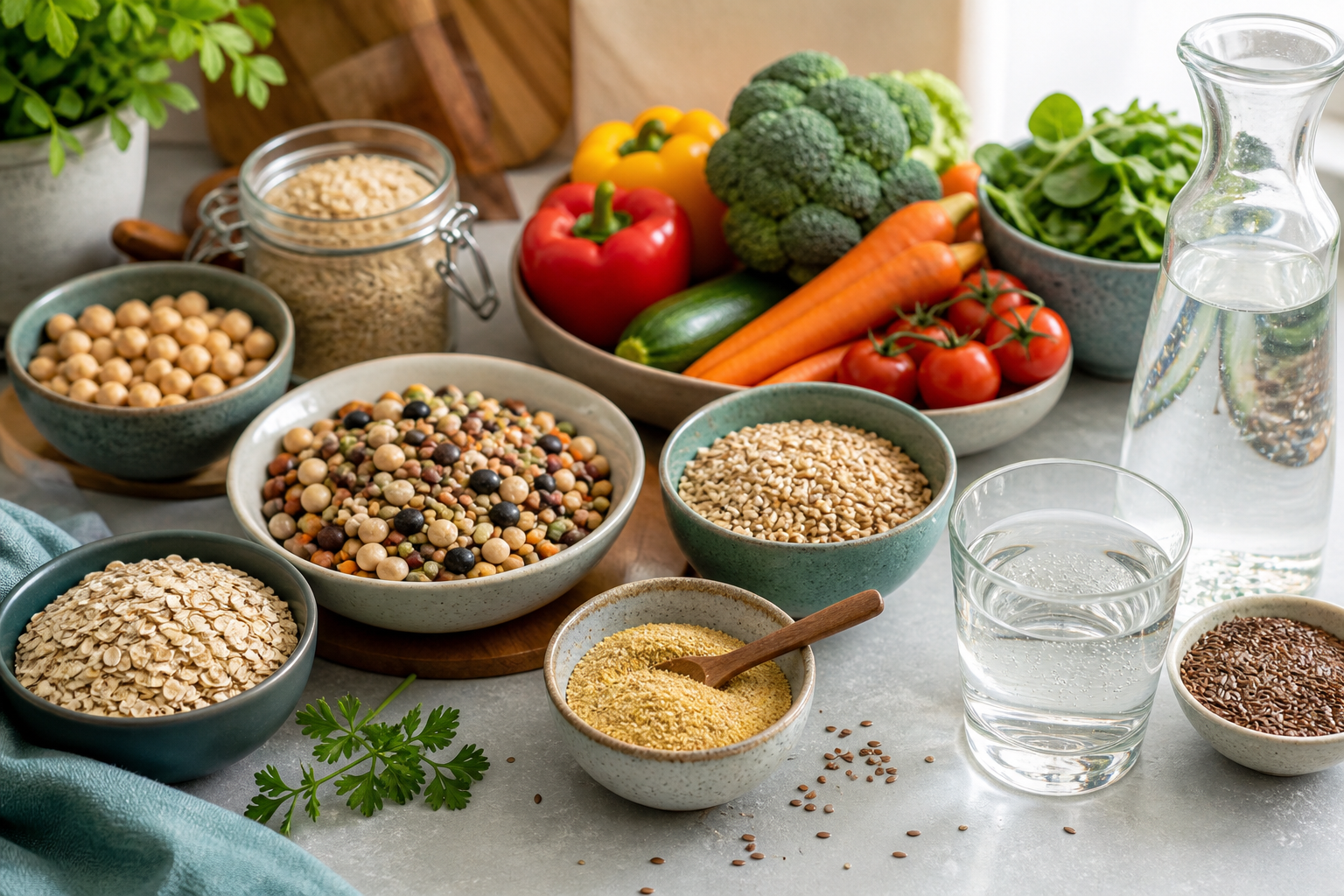
Vegetables, whole grains, pulses, low-fat dairy foods where tolerated and regular hydration provide a sound foundation. Lifestyle measures complement prescribed urate-lowering medicine rather than replacing it. Enemas, “detoxification” programmes and attempts to alkalise the blood do not treat gout and may be unsafe.
Useful supplements
Supplements should be selected for the individual rather than used automatically. Product directions and advice from an appropriately qualified professional should take precedence over general information.
| Supplement | Effects |
|---|---|
| Krill oil or marine fish oil | Provides EPA and DHA, described as supporting a normal inflammatory response. |
| Magnesium citrate | Intended to support circulation and normal elimination processes. |
| Spirulina or a green-powder formula | Included as a concentrated source of nutrients and described as alkalising. |
| Hop alpha acids | Intended to help reduce pain and inflammatory activity. |
| Vitamin D | Supports normal immune and inflammatory regulation. |
These products do not lower urate reliably enough to treat gout. Fish oil, hop products and magnesium can interact with medicines or cause adverse effects, and excessive vitamin D is harmful. Spirulina and blended green powders vary considerably in composition and quality.
The most effective prevention plan is based on individual risk: review medicines and kidney health, keep hydrated, moderate alcohol, pursue gradual weight management and take prescribed urate-lowering therapy consistently when indicated. Repeated untreated attacks can damage joints, form hard deposits called tophi and increase the risk of kidney stones.
Looking for personalised nutrition and lifestyle support? An FNTP member may be able to help you explore an approach suited to your individual needs. Find an FNTP practitioner.
This article is for general education and does not replace individual medical advice, diagnosis or treatment.