Varicose veins are swollen, twisted veins beneath the skin, most commonly in the legs. They develop when one-way valves no longer direct blood efficiently back towards the heart, allowing blood to pool and pressure to rise. Age, pregnancy, family history, excess weight, previous deep-vein thrombosis and long periods standing or sitting all increase risk.
Many are mainly cosmetic, but some cause aching, heaviness, itching, ankle swelling or skin changes. Symptoms are often worse after prolonged standing and improve when the legs are raised. Complications can include eczema, slow-healing ulcers, bleeding and superficial or deep vein thrombosis.
Self-care and treatment
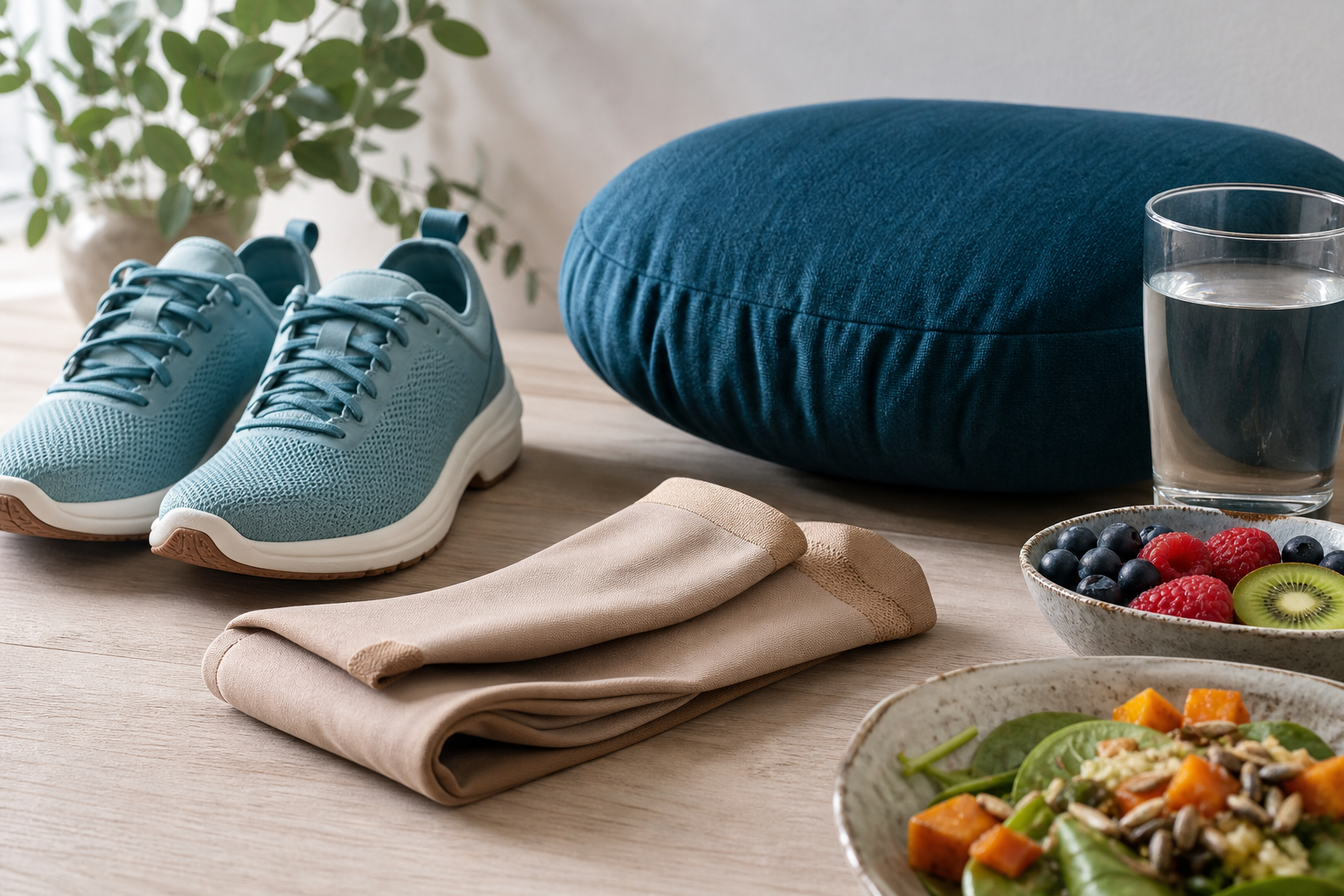
Walking and other regular activity use the calf muscles to help return blood upwards. Avoid remaining in one position for long periods, elevate the legs when resting, maintain a comfortable weight and moisturise dry skin. Compression hosiery can reduce pain and swelling but should be professionally selected, particularly when arterial circulation may be impaired.
Recognising serious symptoms
See a GP for pain, swelling, itching, skin changes or an ulcer that has not healed after two weeks. Bleeding from a varicose vein needs urgent help. Sudden one-sided leg swelling, warmth or pain may indicate a clot and also requires prompt assessment.
Duplex ultrasound maps blood flow before treatment. Endothermal ablation is commonly preferred; foam sclerotherapy or surgery may be offered when it is unsuitable. Procedures are not normally undertaken during pregnancy because many pregnancy-related varicose veins improve after birth.
Useful supplements
Supplements should be selected for the individual rather than used automatically. Product directions and advice from an appropriately qualified professional should take precedence over general information.
| Supplement | Effects |
|---|---|
| Anthocyanidins, such as grapeseed, bilberry or pine-bark extract | Provides antioxidant plant compounds described as supporting blood-vessel integrity and repair of venous leg ulcers. |
| Vitamin C with bioflavonoids | Supports normal collagen formation for the structure of blood-vessel walls. |
| Vitamin E | Provides antioxidant protection and is described as supporting circulation and tissue healing. |
Evidence that these supplements reverse established varicose veins is limited. High-dose vitamin E and concentrated plant extracts may increase bleeding risk or interact with anticoagulants. Large doses of vitamin C may cause digestive upset and increase kidney-stone risk in susceptible people.
Fibre and fluid help prevent constipation but do not repair faulty vein valves. Coffee enemas and castor-oil packs do not “detoxify” venous blood and may cause harm. When symptoms or skin damage are significant, vascular assessment and an effective mechanical or procedural treatment are more appropriate than relying on supplements.
Looking for personalised nutrition and lifestyle support? An FNTP member may be able to help you explore an approach suited to your individual needs. Find an FNTP practitioner.
This article is for general education and does not replace individual medical advice, diagnosis or treatment.