
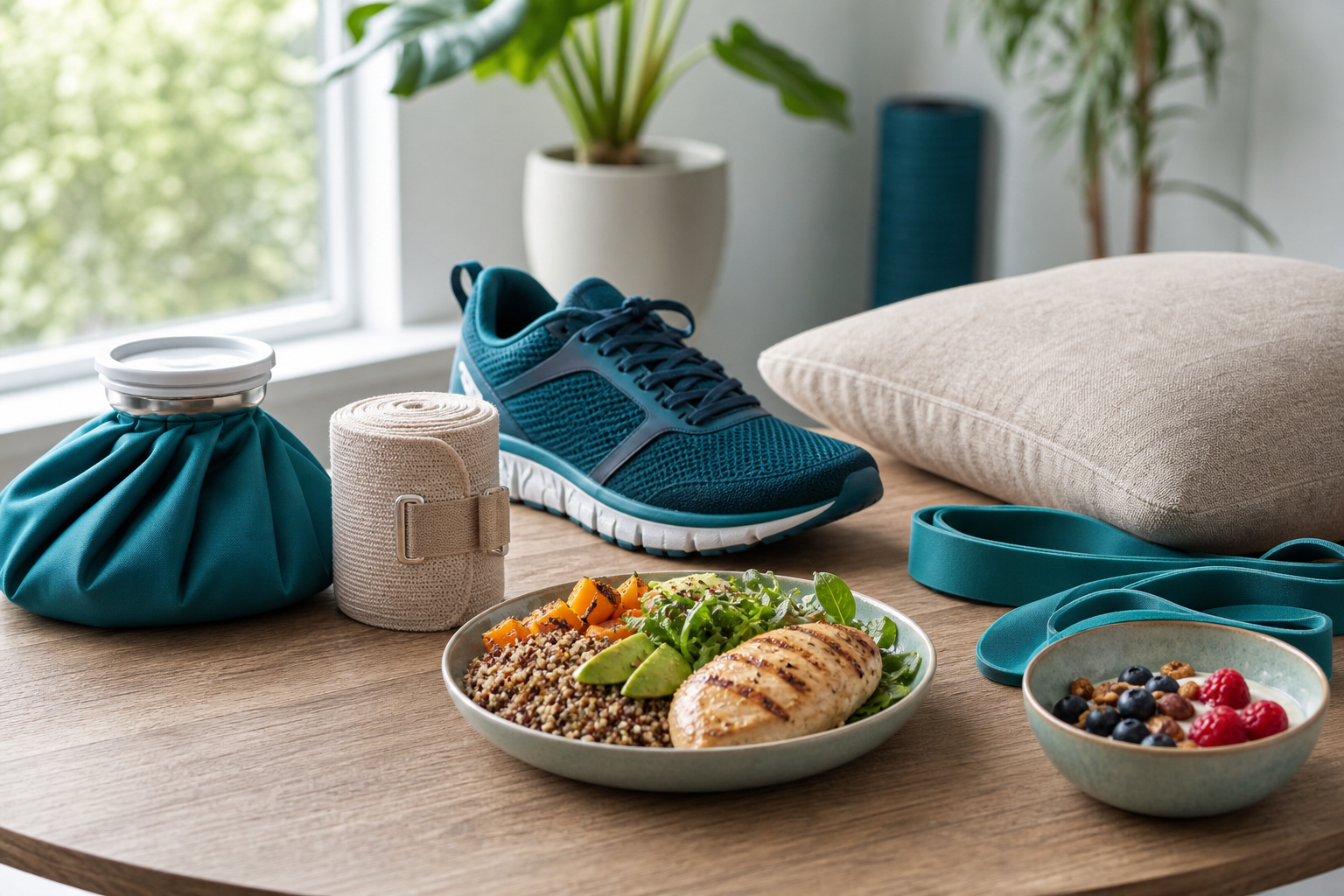
A sprain occurs when a ligament—the strong connective tissue linking bones at a joint—is overstretched or torn. Ankles, knees, wrists and thumbs are common sites. Pain, swelling, bruising and reduced movement usually follow an awkward landing, twist or impact. A strain affects muscle or tendon rather than ligament, although early self-care is similar.
For the first two to three days, NHS advice uses PRICE: protect the area, rest from aggravating activity, apply wrapped ice for up to 20 minutes every two to three hours, use comfortable compression, and elevate the injury. Avoid heat, alcohol and massage initially because these may increase swelling.
Recovery and warning signs
As soon as pain allows, begin gentle movement so the joint does not become stiff. Loading should then increase gradually, with strength, balance and sport-specific work before full return. Many sprains feel better within two weeks, but severe ligament injuries can take months.
Recognising serious symptoms
Seek help from NHS 111 for worsening pain or swelling, inability to bear weight, marked stiffness or failure to improve. Call 999 or attend A&E after a crack, deformity, numbness, tingling, a cold limb or blue-grey colour change, as a fracture or serious injury may be present.
Healing requires enough energy, protein, vitamin C, zinc and other micronutrients. A varied diet with suitable protein, vegetables, fruit, whole grains, nuts, seeds and oily fish usually provides this. Restrictive “anti-inflammatory” diets are more likely to reduce nutritional intake than accelerate ligament repair.
Useful supplements
Supplements should be selected for the individual rather than used automatically. Product directions and advice from an appropriately qualified professional should take precedence over general information.
| Supplement | Effects |
|---|---|
| Glucosamine | Supplies a compound used in connective tissue and is intended to support ligament repair. |
| MSM | Provides an organosulphur compound described as supporting inflammatory balance, circulation and muscle relaxation. |
| Vitamin C with bioflavonoids | Supports collagen formation, wound healing and antioxidant protection. |
| Zinc citrate | Supports protein synthesis, immune function and normal wound healing. |
| Multivitamin and mineral formula | Provides broad nutritional cofactors for energy production and tissue repair. |
| Krill oil or marine fish oil | Provides EPA and DHA, which support normal inflammatory regulation. |
| Magnesium citrate | Supports normal muscle and nerve function and fluid-electrolyte balance. |
| Aloe vera | Used topically or orally in the source to soothe inflammation and support healing. |
| Supergreens powder | Provides concentrated plant nutrients and chlorophyll and is described as supporting wound healing and acid–alkaline balance. |
| Hop alpha acids | Intended to provide pain-relieving and inflammation-modulating effects. |
| Anthocyanidins such as grapeseed or bilberry extract | Provides antioxidant plant pigments described as moderating inflammatory signalling. |
Evidence that glucosamine or MSM speeds acute ligament healing is limited. The source zinc dose is too high for routine use and can cause copper deficiency. Fish oils, vitamin E and herbs may affect bleeding, while oral aloe and magnesium can cause diarrhoea. Supplements cannot stabilise a torn ligament or correct a missed fracture.
Looking for personalised nutrition and lifestyle support? An FNTP member may be able to help you explore an approach suited to your individual needs. Find an FNTP practitioner.
This article is for general education and does not replace individual medical advice, diagnosis or treatment.