
Constipation means passing stools less often than usual or finding them difficult to pass. Stools may be hard, dry or unusually large, and there may be straining, discomfort or a sense that the bowel has not emptied fully. Normal bowel frequency varies, so a change from an individual’s usual pattern can be as important as a fixed number of bowel movements.
Common contributors include low fibre intake, insufficient fluid, reduced activity, disrupted routine, pregnancy, stress and medicines such as opioid painkillers. Irritable bowel syndrome, diverticular disease and some neurological, endocrine or bowel conditions can also be involved. A new or persistent change should not automatically be attributed to diet.
Start with practical foundations
Adults are generally advised to aim for about 30 grams of fibre daily. Vegetables, fruit, pulses, whole grains, nuts and seeds can help, but fibre is best increased gradually. A sudden large increase can cause bloating and may make symptoms worse if fluid intake is inadequate.
Regular drinks help fibre work effectively. There is no universal requirement to force a particular volume, but urine that is consistently dark or strong-smelling may indicate insufficient fluid. People with heart or kidney conditions who have been given a fluid limit should follow their clinical advice.
Movement stimulates normal bowel activity. Walking and other manageable exercise can help, particularly after illness or a sedentary period. Establishing an unhurried toilet routine is also useful: respond to the urge to go, allow enough time, and consider placing the feet on a low stool so the knees sit above the hips.
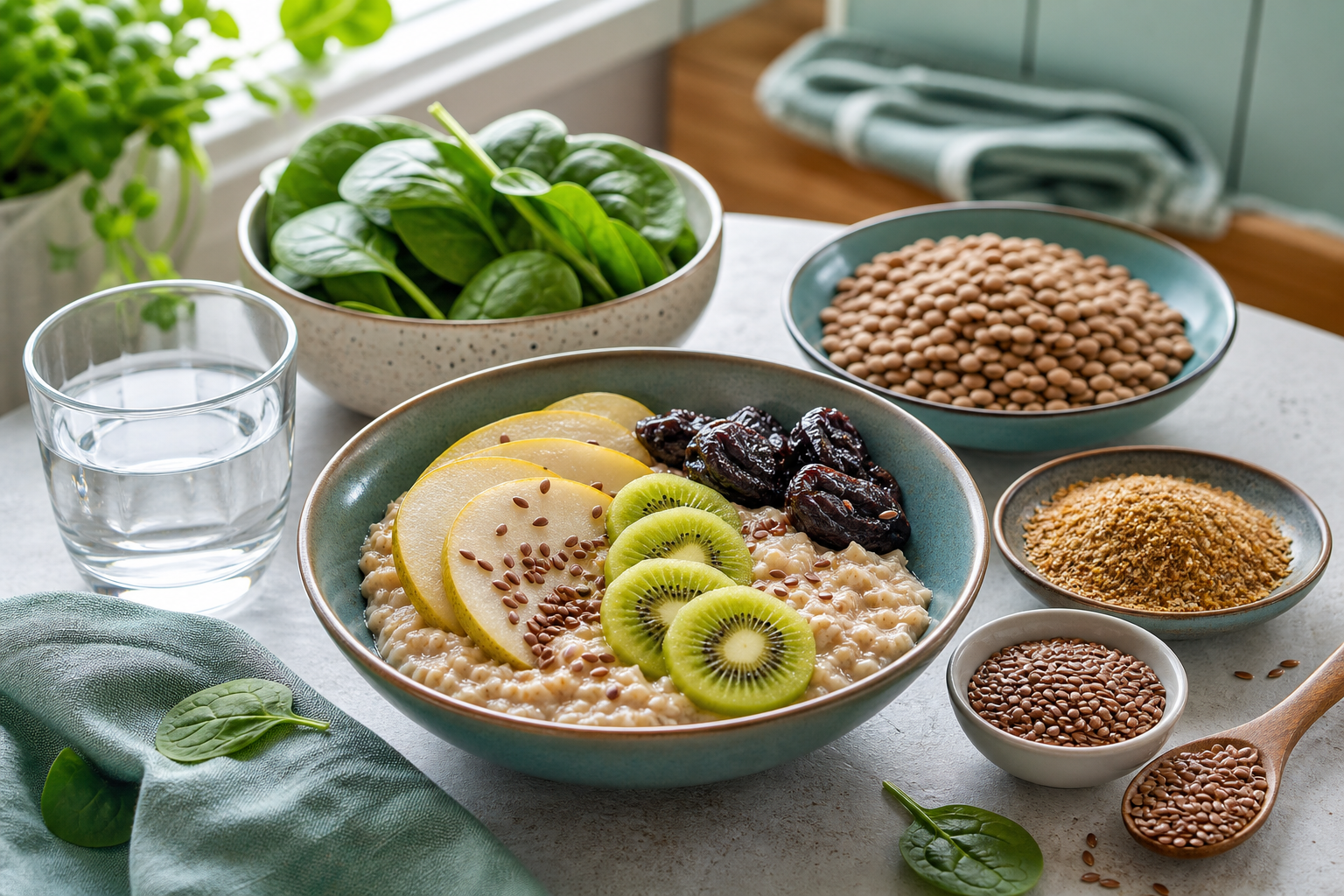
Prunes, pears, kiwi fruit, pulses and linseeds can be useful food-based options. Ground or soaked linseed should be introduced in a modest amount with adequate fluid. The prolonged homemade “linseed tea” method in the original document is unnecessary for most people and could make dosing and hygiene harder to judge.
Medicines and warning signs
A pharmacist can recommend a suitable short-term laxative when food, fluid and activity are not enough. Different products soften stools, increase bulk or stimulate the bowel, so the right choice depends on the situation. Long-term or repeated use should be reviewed rather than stopped abruptly without advice.
Recognising serious symptoms
See a GP if constipation is regular, not improving, accompanied by ongoing bloating or abdominal pain, or associated with blood in the stool, unintentional weight loss, persistent tiredness or a sudden change in bowel habit. Long-standing constipation can lead to faecal impaction, sometimes causing liquid stool to leak around the blockage. This requires proper treatment; manual removal should never be attempted at home.
The original article mentions water and magnesium enemas. Enemas can injure the bowel or disturb fluid and electrolyte balance if used incorrectly. They should only be used when recommended and explained by an appropriate healthcare professional.
Useful supplements
Supplements should be selected for the individual rather than used automatically. Product directions and advice from an appropriately qualified professional should take precedence over general information.
| Supplement | Effects |
|---|---|
| Krill oil or marine fish oil | Intended to support inflammatory balance and the health of the intestinal wall. |
| Magnesium citrate | Intended to ease muscular contraction and support the intestinal wall; it may also soften stools in some people. |
| Psyllium husk, pectin or guar gum | Provides fibre with a bulking action that can help move bowel contents through the digestive tract; too much may be counterproductive and it must be taken with adequate water. |
| Bentonite clay | Described in the source as being particularly useful for constipation-predominant IBS. |
| Aloe vera | Intended to encourage bowel regularity by acting as a prebiotic, helping hydrate stools and providing soluble fibre. |
| Probiotic formula | Intended to support a balanced bowel microbiota. |
| Botanical colon-support formula | Combines ingredients described as supporting colon health, regular elimination and the growth of beneficial bacteria. |
| Broad-spectrum plant digestive enzymes | Intended to assist food breakdown across a range of digestive conditions and increase nutrient availability. |
These effects reword the original “Why?” column but do not establish that each product is effective or appropriate. Psyllium has a recognised role as a bulk-forming laxative, but it must be kept away from some medicines and taken with fluid. Excess magnesium commonly causes diarrhoea and can be unsafe in significant kidney disease. Aloe preparations and stimulant-containing “colon cleanse” products may cause cramping, diarrhoea or electrolyte disturbance.
Bentonite clay can bind medicines and nutrients and may contain contaminants; it is not a routine treatment for constipation. Digestive enzymes do not correct most causes of constipation, and gluten should not be removed solely on this basis without appropriate assessment for coeliac disease.
Constipation usually responds best to small, consistent changes rather than an aggressive cleanse: gradually improve fibre, drink according to need, move regularly, create a workable toilet routine and use an appropriate laxative when advised. Persistent symptoms deserve investigation, not simply a larger collection of supplements.
Looking for personalised nutrition and lifestyle support? An FNTP member may be able to help you explore an approach suited to your individual needs. Find an FNTP practitioner.
This article is for general education and does not replace individual medical advice, diagnosis or treatment.