
Anaemia means that the blood has too few red blood cells or too little haemoglobin to carry oxygen around the body effectively. It is not a single diagnosis: iron deficiency is the most common form, but vitamin B12 or folate deficiency, chronic illness, inherited blood conditions and other causes require different treatment.
Typical symptoms include tiredness, weakness, breathlessness, headaches, palpitations and skin that appears paler than usual. Some people also notice hair loss, changes to the nails, a sore tongue, restless legs or cravings for non-food substances such as ice. Because these symptoms have many possible causes, a blood test is essential before assuming that iron is needed.
Finding the cause matters
Iron deficiency may result from heavy periods, pregnancy, inadequate intake, reduced absorption or bleeding from the stomach or bowel. Medicines such as non-steroidal anti-inflammatory drugs can contribute to gastrointestinal bleeding. When the reason is not obvious, a GP may arrange further tests rather than simply recommending supplements.
Vitamin B12 or folate deficiency can also cause anaemia. B12 deficiency may additionally produce pins and needles, problems with balance, memory or vision, and some neurological effects can become irreversible if treatment is delayed. Pernicious anaemia is an autoimmune condition that reduces B12 absorption and requires medical management.
Recognising serious symptoms
Seek urgent advice for severe breathlessness, chest pain, fainting, a very rapid heartbeat or signs of significant bleeding. Iron tablets should always be kept out of children’s reach because overdose can be fatal.
Food and absorption
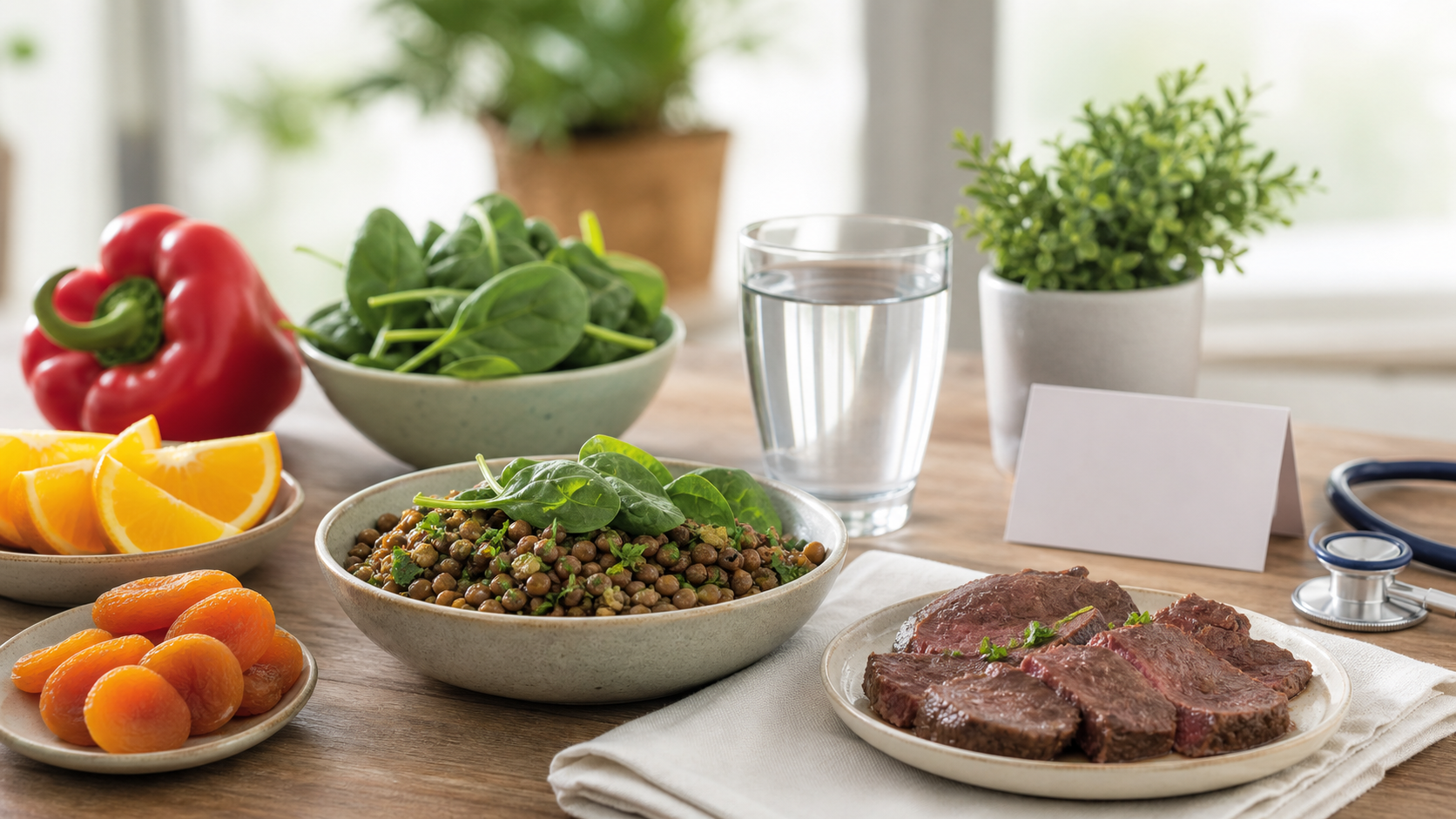
Iron-rich foods include meat, pulses, tofu, nuts, seeds, dried fruit, dark-green vegetables and fortified cereals or bread. Iron from animal foods is generally absorbed more readily, but a well-planned vegetarian or vegan diet can still provide iron. Combining plant sources with vitamin-C-rich foods—such as peppers, berries, citrus fruit or broccoli—can improve absorption.
Tea and coffee can reduce iron absorption when taken with a meal or iron tablet, so leaving a gap may be helpful. Large amounts of calcium taken at the same time can also interfere. These details matter most when iron status is already low; there is no need for an otherwise healthy person to become anxious about every food combination.
If iron tablets are prescribed, follow the clinician’s instructions. Constipation, diarrhoea, nausea, abdominal discomfort and dark stools can occur. A pharmacist or GP can advise if side effects make adherence difficult. Repeat blood tests are usually needed to confirm that treatment is working and iron stores are being replenished.
Useful supplements
Supplements should be selected for the individual rather than used automatically. Product directions and advice from an appropriately qualified professional should take precedence over general information.
| Supplement | Effects |
|---|---|
| Iron | Replaces iron when iron deficiency has been confirmed and provides the mineral needed to make haemoglobin. |
| Vitamin C | Helps increase the absorption of iron. |
| Vitamin A | Supports iron absorption. |
| L-lysine | May assist iron absorption and can be relatively low in some diets that exclude red meat. |
| Vitamin B12 | Supports red blood cell formation and may be needed when B12 intake or absorption is inadequate; other B vitamins may also need consideration. |
Iron should not be taken simply because someone feels tired. Unnecessary supplementation can cause digestive problems, obscure the reason for symptoms and be dangerous in excess. Vitamin B12 treatment also depends on the cause: dietary deficiency may respond to oral supplementation, whereas impaired absorption may require a different clinical approach.
A coordinated approach
Nutrition has an important role in preventing and correcting some deficiencies, but the central task is to identify why anaemia has developed. An appropriate plan combines medical investigation, treatment of blood loss or malabsorption where relevant, a nutritionally adequate diet and follow-up testing. Feeling better is welcome, but it does not replace confirming that blood results have returned to a healthy range.
Looking for personalised nutrition and lifestyle support? An FNTP member may be able to help you explore an approach suited to your individual needs. Find an FNTP practitioner.
This article is for general education and does not replace individual medical advice, diagnosis or treatment.