
Psoriasis is a long-term immune-mediated condition that speeds up skin-cell turnover. It produces dry, flaky, itchy or painful patches that may appear pink or red with silvery scale on lighter skin and grey, violet or dark brown on deeper skin tones. The scalp, elbows, knees, trunk, skin folds and nails may be affected.
Symptoms tend to fluctuate. Stress, smoking, alcohol, obesity, infection, skin injury and some medicines can trigger flares, but psoriasis is not caused by poor hygiene, “toxins” or faulty fat digestion. It is not contagious. Recurrent joint pain, swelling or morning stiffness needs assessment because some people develop psoriatic arthritis.
Treatment and daily care
Regular emollients reduce dryness and scale. Prescribed options include vitamin D preparations, topical steroids, coal-tar products and other scalp or skin treatments. More extensive disease may require supervised light therapy, tablets or injectable biological medicines. Emollient residue on clothing and bedding is a fire hazard, so keep it away from flames and cigarettes.
Sunlight improves symptoms for some people but aggravates them in others, and sunburn can provoke a flare. Medical phototherapy uses controlled doses; it is not equivalent to unmonitored sun exposure or sunbeds.
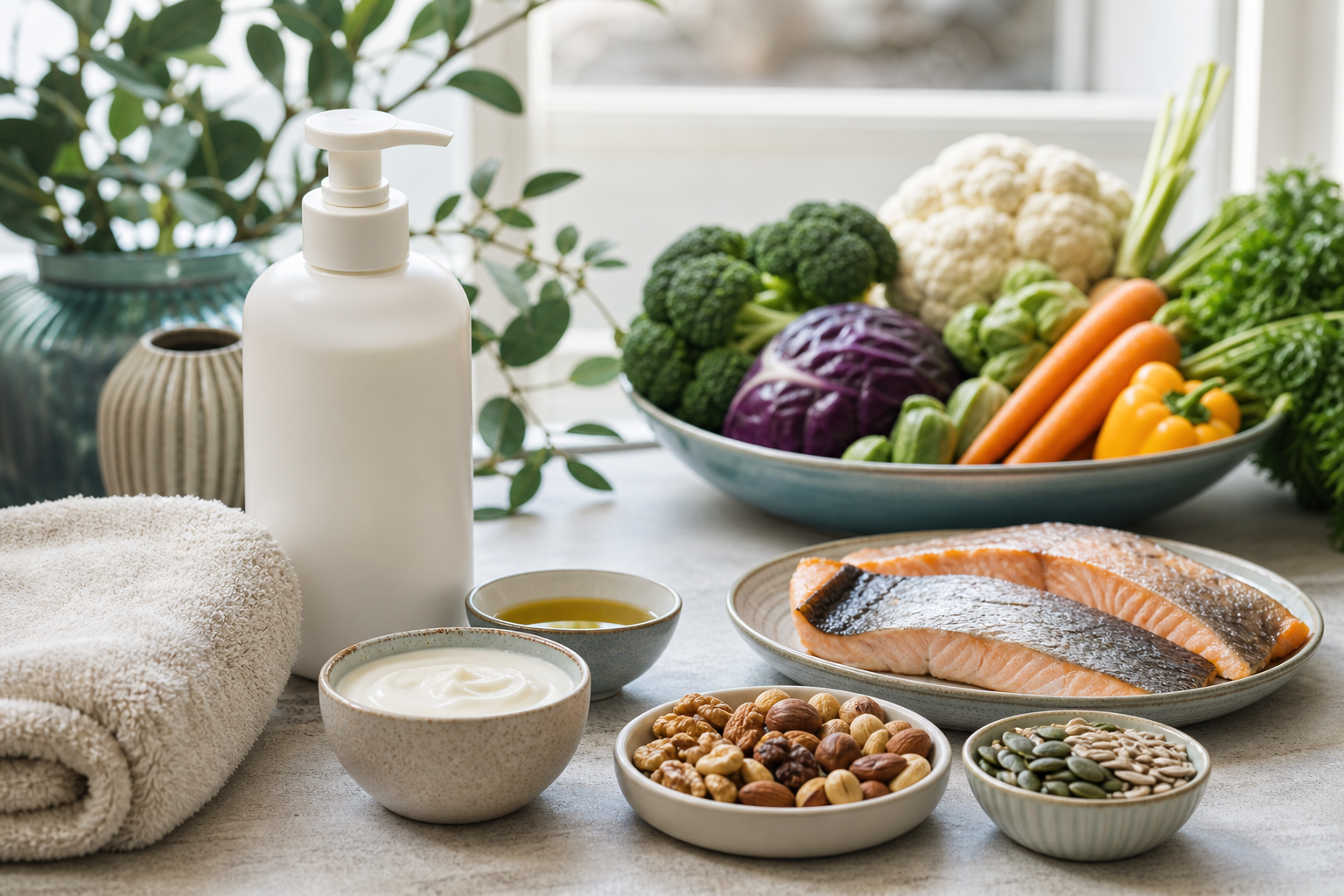
A balanced diet, regular activity, smoking cessation and moderate alcohol support cardiovascular health, which is particularly relevant because psoriasis is associated with higher cardiometabolic risk. Nightshade vegetables, gluten and dairy do not need to be excluded routinely. A targeted exclusion is more sensible only when there is a diagnosed allergy, coeliac disease or a clear, reproducible personal trigger.
Useful supplements
Supplements should be selected for the individual rather than used automatically. Product directions and advice from an appropriately qualified professional should take precedence over general information.
| Supplement | Effects |
|---|---|
| Krill oil or marine fish oil | Provides EPA and DHA, which support inflammatory regulation and normal skin and intestinal-barrier function. |
| Evening primrose oil or starflower oil | Provides GLA, used to produce signalling compounds involved in inflammatory balance and skin comfort. |
| Zinc citrate | Supports normal skin repair, immune function and fatty-acid metabolism. |
| Magnesium citrate | Supports normal skin hydration, enzyme activity, muscle function and the stress response. |
| Silicon | Provides a trace element involved in connective-tissue structure. |
| Broad-spectrum beneficial bacteria | Intended to support intestinal microbial balance and normal bowel function. |
| Vitamins A, C and E with selenium | Provides antioxidant nutrients involved in epithelial and connective-tissue health. |
| Aloe vera | Used topically for a cooling, soothing effect and described as supporting inflammatory balance. |
| Hop alpha acids | Intended to support normal inflammatory regulation. |
| Spirulina or greens powder | Provides concentrated plant nutrients and is described as supporting acid–alkaline and inflammatory balance. |
| Vitamin D3 | Supports immune regulation and normal skin and bone health. |
High-dose vitamin A can damage the liver and is unsafe in pregnancy; excess zinc can cause copper deficiency, and selenium or vitamin D can be toxic. Aloe taken orally can cause diarrhoea and interact with medicines. Supplements should never replace prescribed psoriasis treatment, particularly when skin is widespread, infected or rapidly worsening.
Looking for personalised nutrition and lifestyle support? An FNTP member may be able to help you explore an approach suited to your individual needs. Find an FNTP practitioner.
This article is for general education and does not replace individual medical advice, diagnosis or treatment.