
Osteoporosis is a condition in which bones become less dense and more fragile, increasing the likelihood of a fracture. It develops gradually and may cause no symptoms until a wrist, hip or spinal bone breaks. Collapsed vertebrae can lead to persistent pain, loss of height and a stooped posture.
Bone is living tissue that is continuously renewed. With age, breakdown can outpace formation. Risk rises after menopause, with long-term high-dose steroid treatment, low body weight, smoking, heavy alcohol use, prolonged immobility, malabsorption and some hormonal or inflammatory conditions. Osteoporosis affects men as well as women.
Assessment and treatment
A fracture-risk calculation and, where appropriate, a DEXA scan help guide treatment. A T-score of -2.5 or below is consistent with osteoporosis, but the decision to prescribe medicine also considers age, previous fractures and overall risk. Treatment may include a bisphosphonate, denosumab, raloxifene, hormone replacement therapy or a bone-building medicine. These treatments reduce fracture risk and should not be replaced by supplements.
The idea that osteoporosis is simply calcium being “misplaced” because the body is too acidic is not supported by human physiology. Blood pH is tightly controlled by the lungs and kidneys. A nutritious diet can support bone, but “alkalising” programmes do not draw calcium back into the skeleton.
Food, movement and fracture prevention
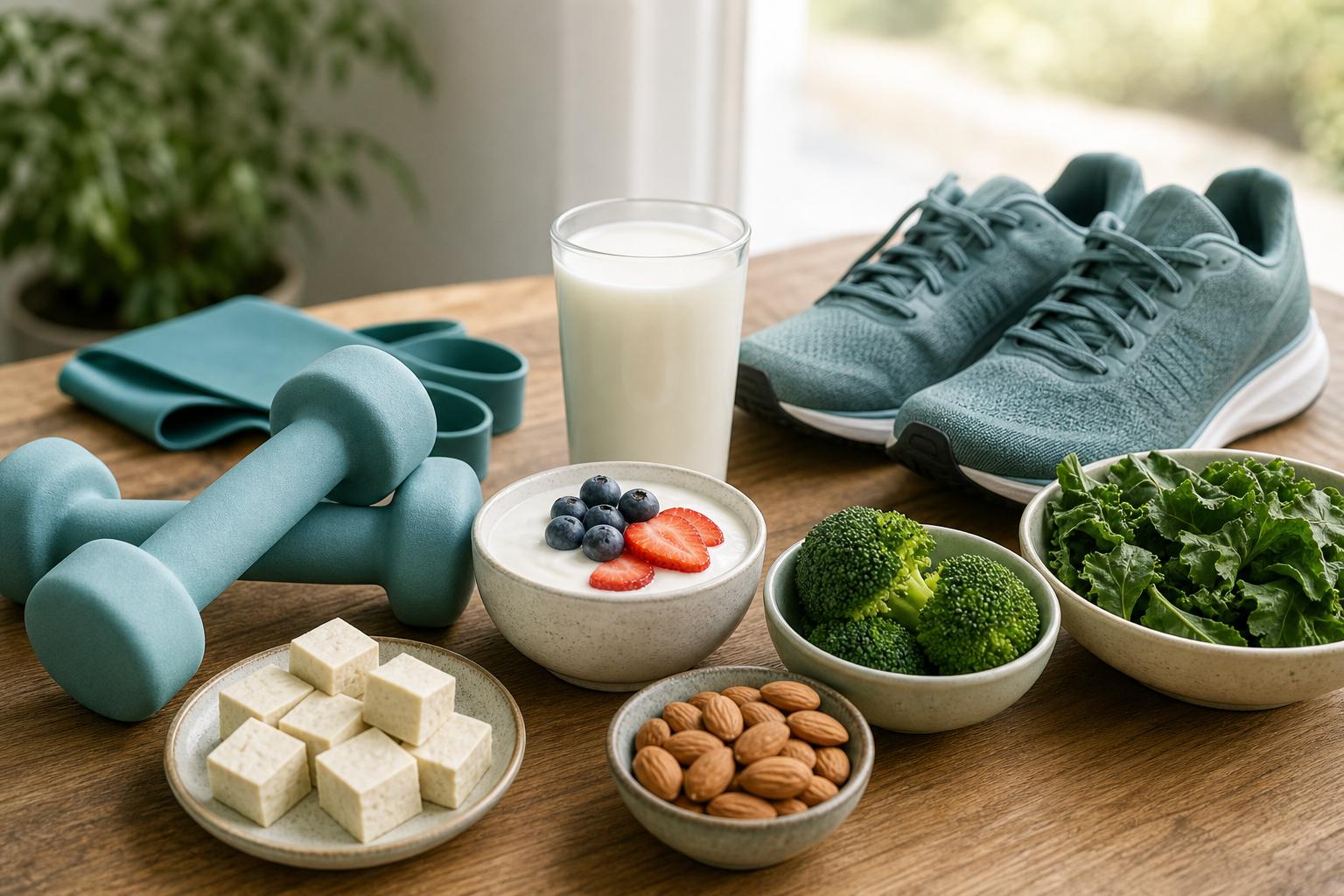
Adults generally need about 700 mg of calcium daily, ideally from food such as milk, yoghurt, cheese, calcium-set tofu, fortified alternatives, pulses and suitable green vegetables. Vitamin D enables calcium absorption. UK adults are advised to consider 10 micrograms daily during autumn and winter, with year-round supplementation advised for some groups.
Weight-bearing activity and progressive resistance exercise stimulate bone and preserve the muscle needed to prevent falls. Balance work, appropriate footwear, good vision and hearing, and removing trip hazards are also important. Anyone with vertebral fractures or very fragile bones should obtain tailored exercise advice before adding impact or loaded spinal movements.
Useful supplements
Supplements should be selected for the individual rather than used automatically. Product directions and advice from an appropriately qualified professional should take precedence over general information.
| Supplement | Effects |
|---|---|
| Krill oil or marine fish oil | Provides omega-3 fats that support normal inflammatory regulation and cell-membrane function. |
| Vitamin D | Enables normal absorption and use of calcium and supports bone mineralisation. |
| Magnesium citrate | Provides magnesium needed for normal bone structure and vitamin D metabolism. |
| Bone-support multivitamin and mineral formula | Provides a range of nutrients involved in maintaining bone structure, including magnesium, calcium, zinc, vitamins C and K, manganese, boron and copper. |
| Supergreens powder | Provides concentrated plant nutrients and is described in the source as supporting acid–alkaline balance. |
| Hop alpha acids | Intended to support inflammatory balance and provide natural pain-relieving effects. |
Calcium supplements are appropriate when dietary intake is inadequate or a clinician advises them; more is not necessarily better. High-dose vitamin D can cause dangerous calcium levels, magnesium may cause diarrhoea, and vitamin K can interfere with warfarin. Fish oils and herbs may also interact with medicines. Calcium and vitamin D may need to be taken separately from a bisphosphonate.
Smoking cessation, moderate alcohol intake, adequate protein and a varied diet all contribute to bone health. Because fractures can have major consequences, a personalised plan should combine nutrition and activity with formal fracture-risk assessment and any prescribed medicine.
Looking for personalised nutrition and lifestyle support? An FNTP member may be able to help you explore an approach suited to your individual needs. Find an FNTP practitioner.
This article is for general education and does not replace individual medical advice, diagnosis or treatment.