
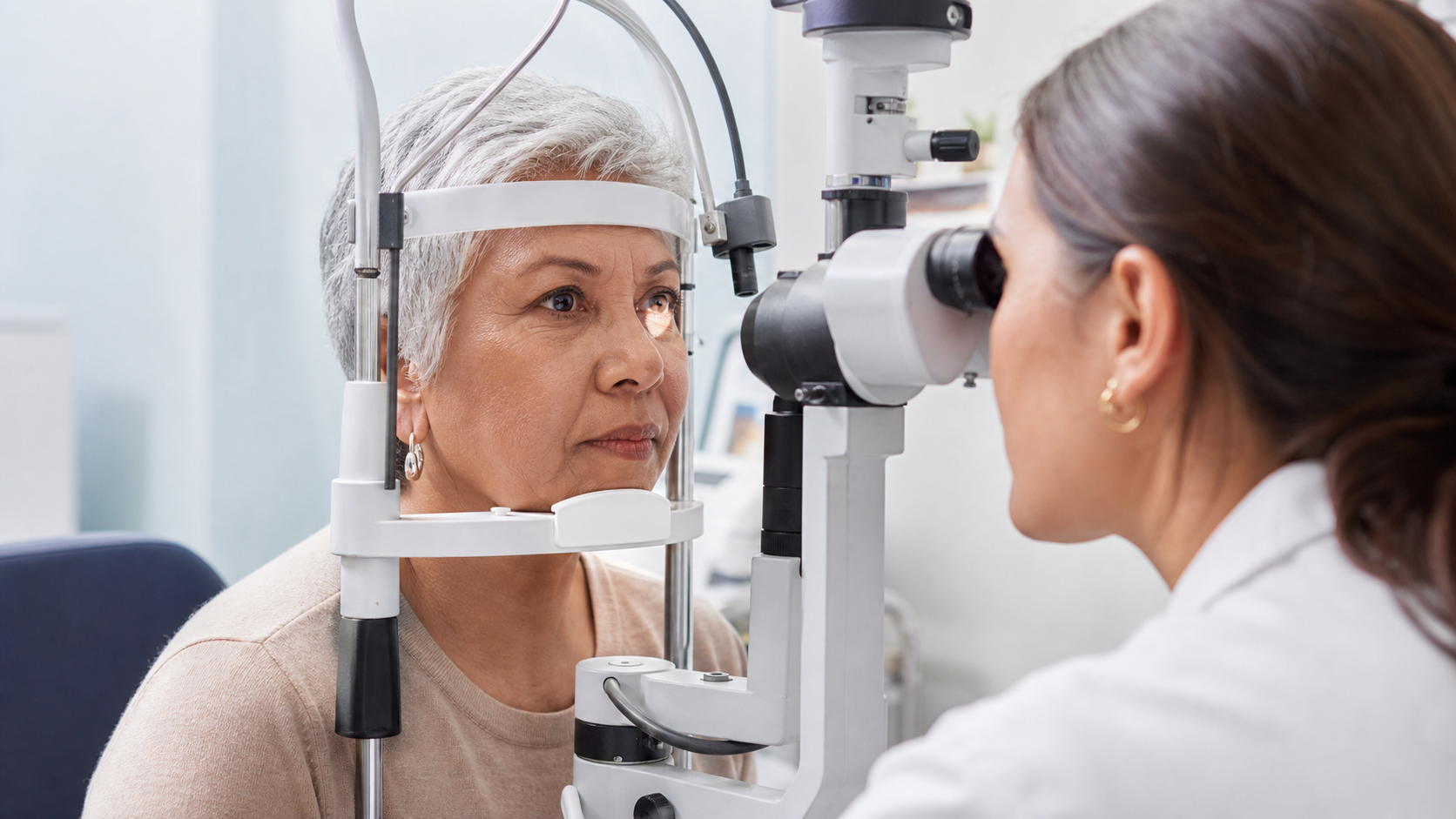
“Eye disorder” covers a wide range of conditions, from dry-eye symptoms and inflammation to cataract, retinal disease and problems affecting the optic nerve. Some develop gradually and cause few early symptoms; others need urgent treatment to protect sight. Nutrition can support normal eye structure and function, but it cannot replace an eye examination or condition-specific care.
Common symptoms include dryness, grittiness, itching, redness, light sensitivity, blurred vision, difficulty seeing at night, floaters or changes in peripheral vision. Their causes are not always obvious. Screen use, contact lenses, allergy, infection, medication, diabetes, autoimmune disease and normal ageing may all contribute.
Sudden loss or marked deterioration of vision, new flashes or a dark curtain across the sight, severe eye pain, a red painful eye, injury or chemical exposure requires urgent assessment. Routine sight tests are also valuable: they may identify glaucoma, cataract, retinal change and signs of systemic disease before a person notices a problem.
Everyday eye health
Protecting the eyes begins with practical measures. Take regular breaks from close screen work, position screens to reduce glare and blink consciously when concentrating. Good contact-lens hygiene matters, and sunglasses should provide genuine UVA and UVB protection. Smoking is strongly associated with several sight-threatening conditions, so stopping is an important preventive step.
People with diabetes should work towards agreed glucose and blood-pressure targets and attend retinal screening. Dryness may improve with environmental changes, warm compresses or preservative-free lubricating drops, but recurrent symptoms deserve professional advice.
Nutrition for normal vision
A varied diet supplies the nutrients used by the retina, lens, tear film and supporting tissues. Dark-green vegetables provide lutein and zeaxanthin; orange and yellow vegetables provide carotenoids; berries supply anthocyanins; and nuts, seeds, eggs and oily fish contribute fats, minerals and fat-soluble vitamins.
Vitamin A is essential for normal vision, particularly in low light, but true deficiency is uncommon in well-nourished UK adults. Excess preformed vitamin A can be harmful, especially during pregnancy or in liver disease. Supplements marketed for age-related macular degeneration are appropriate only for particular stages of the condition and should be selected with an optometrist or ophthalmologist.
Useful supplements
Supplements should be selected for the individual rather than used automatically. Product directions and advice from an appropriately qualified professional should take precedence over general information.
| Supplement | Effects |
|---|---|
| Vitamin A or an antioxidant formula containing beta-carotene | Supports normal vision, including adaptation to low light. Poor night vision can be associated with deficiency caused by malnutrition, malabsorption or liver disease and warrants assessment. |
| Anthocyanidins from grapeseed or bilberry | Provide antioxidant and anti-inflammatory activity and have traditionally been used to support dark adaptation, although evidence for a meaningful clinical benefit is limited. |
| Vitamin C | Contributes to antioxidant protection and normal collagen formation in eye tissues. It does not treat an eye infection or replace prescribed antibiotics. |
| Vitamin B complex | Supports normal energy metabolism and nervous-system function. Soreness or cracking around the eyelids can sometimes accompany deficiencies of vitamins B2 or B6, but other causes should be excluded. |
More is not necessarily better. High-dose antioxidants may interact with treatment, beta-carotene is not advised for smokers or former smokers in some eye formulas, and supplements cannot reverse cataract or treat glaucoma. An eye-care professional can establish the diagnosis first; nutritional advice can then be tailored to the individual.
Looking for personalised nutrition and lifestyle support? An FNTP member may be able to help you explore an approach suited to your individual needs. Find an FNTP practitioner.
This article is for general education and does not replace individual medical advice, diagnosis or treatment.