
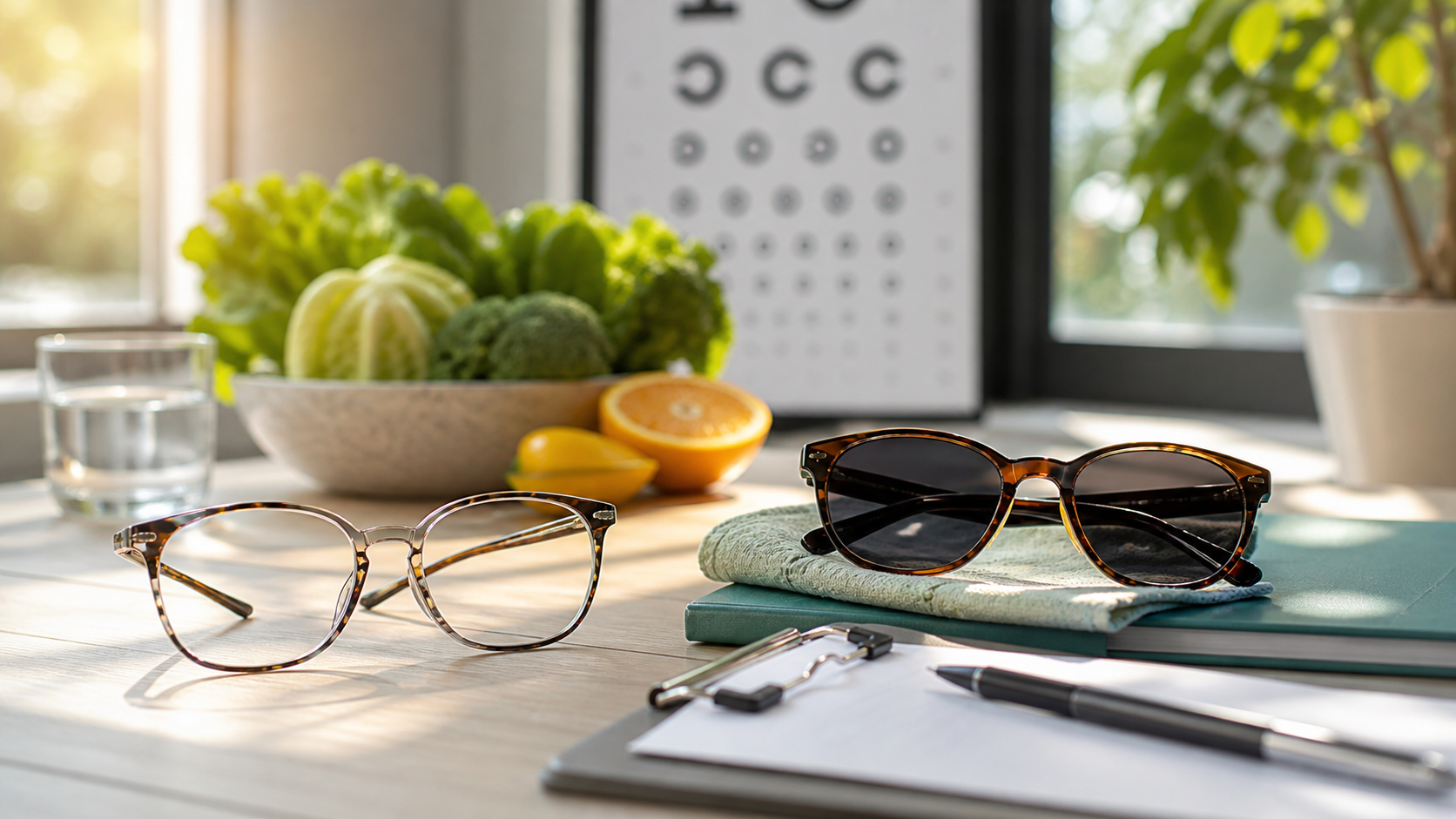
A cataract develops when the normally clear lens inside the eye becomes cloudy. The change usually happens gradually and is most common in later life. Cataracts can affect one or both eyes, and the severity may differ between them.
Typical symptoms include blurred or misty vision, difficulty seeing at night, sensitivity to bright light or glare, halos around lights, faded colours and more frequent changes to a glasses prescription. Some people experience double vision in one eye. Cataracts do not usually cause pain, itching or redness.
Assessment and treatment
Anyone noticing these changes should arrange an eye examination with an optometrist. Cataract symptoms can overlap with other eye conditions, some of which need more urgent treatment. The optometrist can assess the lens, check general eye health and refer to an ophthalmologist where appropriate.
Stronger glasses, brighter task lighting and anti-glare adjustments may help for a time. The effective treatment for a cataract that interferes with everyday life is surgery. Under local anaesthetic, the cloudy lens is removed and replaced with an artificial lens. Cataracts in both eyes are usually treated on separate days.
Surgery does not have to wait until the cataract is “ripe.” The decision depends on how vision affects reading, work, driving, mobility and other priorities. Outcomes are generally good, although every operation carries risks that the eye team will explain.
After surgery, drops are usually prescribed while the eye heals. Rubbing the eye, strenuous activity and getting water directly into it may need to be avoided for a period specified by the surgical team. Vision often improves quickly, but the final glasses prescription is normally reviewed after healing. Increasing pain, redness or a sudden deterioration in vision after an operation requires urgent contact with the eye service.
Sudden loss of vision, new flashing lights, a curtain-like shadow, severe eye pain or a red painful eye are not typical gradual cataract symptoms and require urgent eye-care advice.
Risk and everyday eye health
Age is the main risk factor. Smoking, long-term steroid treatment, diabetes, previous eye injury or surgery, some eye conditions and extensive unprotected sunlight exposure can also increase risk.
Wear sunglasses that provide reliable ultraviolet protection and add a hat in strong sunlight. Avoid smoking and manage diabetes and blood pressure with the relevant clinical team. Regular eye examinations remain important even when vision seems stable.
Driving decisions should be based on measured eyesight, not on how familiar a route feels. An optometrist can explain whether vision meets the legal standard and whether the Driver and Vehicle Licensing Agency needs to be informed.
A varied diet with vegetables, fruit, pulses, nuts, seeds, whole grains and appropriate protein provides antioxidant nutrients for general eye health. However, no food or supplement has been shown to dissolve an established cataract or replace surgery. Be cautious with products marketed as being able to “clear” the lens.
Useful supplements
Supplements should be selected for the individual rather than used automatically. Product directions and advice from an appropriately qualified professional should take precedence over general information.
| Supplement | Effects |
|---|---|
| Anthocyanidins, such as grapeseed, bilberry or pine-bark extract | Provide antioxidant properties. |
| Natural beta-carotene | Provides antioxidant properties. |
| Vitamin C | Provides antioxidant properties. |
| Vitamin E | Provides antioxidant properties. |
| Selenium | Provides antioxidant properties. |
| Vitamin B2 (riboflavin) | Supports the production of glutathione. |
These effects reproduce the original article’s rationale; they should not be interpreted as evidence that supplementation treats cataracts. High-dose antioxidants may be unsuitable with medicines or health conditions. Beta-carotene supplements are particularly inappropriate for some people who smoke or have smoked, while excessive selenium or vitamin E can be harmful.
Protecting function and independence
Cataracts usually progress slowly, so regular assessment allows decisions to be made without panic. Good lighting, an up-to-date prescription and sensible ultraviolet protection can support daily life, while surgery offers an effective option when cloudy vision becomes limiting.
Looking for personalised nutrition and lifestyle support? An FNTP member may be able to help you explore an approach suited to your individual needs. Find an FNTP practitioner.
This article is for general education and does not replace individual medical advice, diagnosis or treatment.